





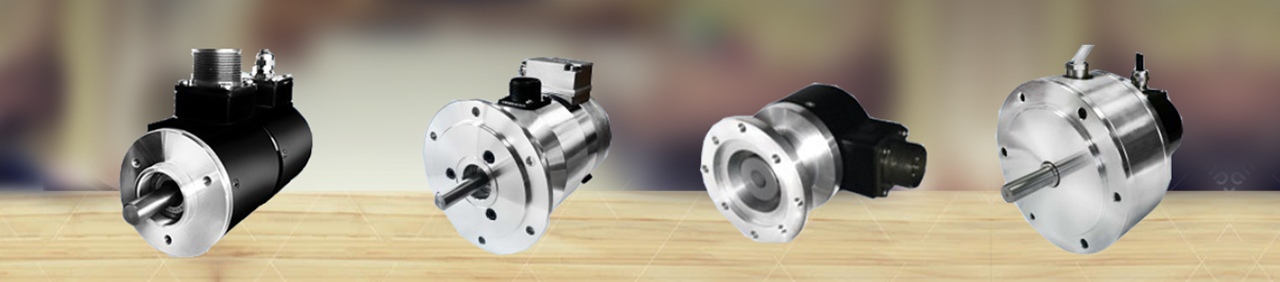
A rotary encoder is an essential device used to determine the angular position of rotating shafts in machinery and automated systems. Often referred to as an optical encoder, this component converts mechanical motion into electrical signals that can be interpreted by control systems. Although they are sometimes mistaken for small electric motors or stepper motors due to their appearance, industrial encoder sensors serve a completely different purpose—providing accurate position and motion feedback in precision machinery.
In most applications, the encoder’s drive shaft is connected directly to a rotating spindle using a flexible coupling. As the shaft turns, the rotary position sensor generates a series of digital pulses that represent the movement and position of the shaft. This signal is created through the interaction of a calibrated disc and a light-emitting diode inside the unit. As the disc rotates, it interrupts the beam of light produced by the diode, creating a pulse train that can be interpreted by control electronics.
The number of pulses generated depends on the number of graduations or slots cut into the encoder disc. This is measured in pulses per revolution (PPR), which determines the resolution of the shaft position encoder. Encoders are available in a wide range of configurations, with pulse counts ranging from as low as 1 pulse per revolution to as high as 20,000 pulses per revolution. These high resolution rotary encoders can operate with different power supplies, typically 5V or 11–30V depending on the model. For example, Greenbank supplies the Italsensor Encoder TK561, which offers 1024 PPR and operates on an 11–30V supply, making it suitable for many industrial environments.
Because of their precision and reliability, encoders are widely used in modern automated systems. An encoder for automation systems provides the feedback required for computer-controlled processes, helping ensure accuracy and repeatability in manufacturing operations. Applications commonly include robotics, machine tools, batching equipment, conveyor systems, and other automated machinery.
There are two primary types of encoders used in industry: incremental encoders and absolute encoders. An incremental encoder generates pulses as the shaft rotates, allowing the control system to track movement relative to a starting position. However, if power is lost, the positional information is also lost. In contrast, an absolute encoder retains its positional data even when power is removed. This makes absolute encoders particularly valuable in applications where position must be maintained at all times, such as indexing systems and precision machine tool operations.
Encoders are widely used across many industries due to their ability to provide precise motion feedback. They are essential components in industrial robotics, welding robots, automated guided vehicles, and production lines. Beyond manufacturing, encoders for robotics and machinery are also used in renewable energy systems such as wind turbines and solar tracking equipment.
Additional sectors that rely on encoder technology include the medical industry, food processing, automated transportation systems, lift and escalator control, steel production, woodworking, and many other areas where accurate rotational monitoring and control are required. With their versatility and precision, rotary encoders continue to play a critical role in modern automation and motion control systems.


